Wednesday, 19 December 2012

The iAbacus - trains and beads and plans

Written in response to the comment, "Explain the iAbacus  to me simply and don't use jargon!"  


Once upon a time...


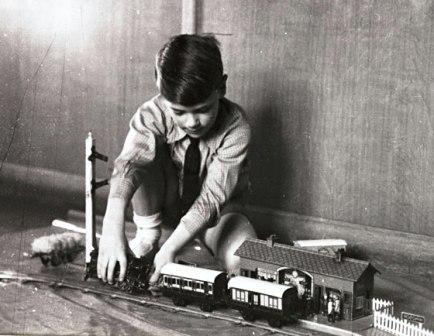
When I was little, I loved pushing a toy train, making those "chuff-chuff  too-toot" noises.  I was in that train embarking on some epic journey.  


Later, I became fascinated by how writing left to right develops a story and saw handwriting as a kind of wriggly footpath. Tracing my finger along maps always gives me a buzz.   Maybe it's because I'm left handed, or left brained but left to right movement is somehow.... right.  I even called my poetry book "Desire Lines".  As a teacher, I would draw lines on the black-board, or move a bead along a wire, or piece of string to show progress.  Like the red in a thermometer expands, or speedometer pointers move, the visual representation made it real.    Once, as an adviser I used an old nursery Abacus as a tool, when I was urging colleagues to move on rather than sit there, describing inertia.  So, the "ABACUS approach" became three questions:  Where are you are now? Where you could be? and How you might get there?  Sliding an Abacus bead helps people talk about circumstance and actions to make things  better. There are are about five stages in the process:
Stage 1: Slide the bead, from left to right to describe how you are feeling.  Choose your own topic and labels.  Examples, far left to far right, include:  AWFUL to BRILLIANT; OBESE to FIT; BANKRUPT to MILLIONAIRE and even DEPRESSIVE to CONFIDENT. You can keep two labels, or add others in between. You could insert UNDERWEIGHT and OK between OBESE to FIT  for example.

Stage 2:  Describe each of your labels in more detail.  UNDERWEIGHT would be 140lbs (for me) and I'd show a holiday picture of you when I was a 10 stone weakling.  In the FIT description you'd list a few things you want to be able to do like swim a mile, climb a tree, or run upstairs. Or how you'd look.  You might have a photo of a film star but we have to be realistic... 

Stage 3: Now you have to prove why you have left the bead where it is by providing information, facts, pictures, or something that shows you are right. So, if you are 20 stone you cannot, honestly, leave the bead on UNDERWEIGHT. Conversely, if your rings fall off your skinny fingers, or your best jeans fall down when your belt is on its last hole you can't claim to be OK.

Stage 4: Is about finding what makes things better, or holds you back from moving to the right.  If you want to be FIT you could say, "Eating fewer pies will help, or not going to the pub".  Someone who is UNDERWEIGHT might say, "Eating more pies." because we are all  different.

Stage 5: Write down what you are going to do, by when and how it will look when it's done.  Eating less and exercising is  vague so detail is important. Putting a lock on the fridge and giving the key to your mate might work.  Hanging up a new jumper that will fit, when you get to the weight is helpful, or a pie chart to tick the right number of pies for each week.  Stage 5 is about DOING something that will make a difference.

Stage 6 is really the second Stage 1 because you go back to the start, by asking yourself, as you look in the mirror, "How do I feel and look now?" Of course, you have those pictures to compare and you should be feeling better if you have done what you prepared in earlier stages.  Now, slide that bead a little closer to where you want it to be, a simple and powerful demonstration of movement.  Stage 6  should include a party with no pies, or lots of pies to celebrate.

So, the  iAbacus started life as....er.... an ABACUS...

In 2004 it looked like this:


By 2007 it was being used like this:

That bit on the left has a list of things she's working on - she's not doing very well on Number 5.


At this stage I was using an array of arty Abacuses.  It was working really well and I slid my bead to HAPPY.  I used it when I was coaching, training and consulting.  Folks liked it and it was THE most popular tool in all my evaluations by far but there were loads of forms and guides and lists and data alongside it.

In 2010,  I met "Dan The Software Man" and we started with an idea of using 21st Century Technology to make it slick and easy.  By the end of 2011 we thought we had a really good version, slip sliding away on screen.

Start simple

I have a saying, "Start simple, it will get complicated anyway, start complicated and you don't stand a chance!"   We had listened to inspectors, quality control freaks and gurus and just loaded all their lists, forms and tick boxes into our computer because you can do that - they eat up that kind of stuff.  

Our really difficult work began when we decided to take out all the unnecessary bits.  It was tough but the eAbacus, as we called it, became simpler to use and better to understand, less wordy and more brainy and by 2012 it was working just how we thought it might.  And then... something wonderful happened.  Using it we found it could do things we had never even dreamed of...  

We could allow several people - as collaborators - to add comments and ideas onto a single abacus .  We could attach files and pictures (of film stars and pie charts) and even all those dense (do I mean detailed?) reports the inspectors and quality controllers had written could be appended.  Then we found we could put all the little bits of information from the 5 Stage sequence in order and slot in coloured pictures of the beads in one place and produce comprehensive and detailed reports.  These are even better than those the quality controllers, the consultants and inspectors produce.  And the whole process is done on screen, we don't have to print one piece of paper, at any point in the process.  We  just email reports to each other.  Our maxim is "Print less well, rather than more badly" so, if you do want to print one copy of your final report when all your work is done and things are better - just click the print button.  
  

In 2013 the iAbacus looks like this..


 ( iAbacus links 21st Century internet Technology with the oldest computing machine in the world)


Dream first and then write lists 


The thing I am most proud of is that the  iAbacus still starts with sliding that bead - from left to right - the genesis of the idea.  I don't want to be negative but so many systems  START with evidence, data and information - the boring but important stuff that buries us to the depth of meaningless.  It has always seemed  far better to start by dreaming about what could be and setting the compass first.  Writing lists, working out average speeds, fuel consumption and cost per mile can come later.  And they are far more interesting when you know where you are going.

"Chuff-chuff, toot toot!"


The end


Sunday, 24 June 2012

The Animal Education System


In 1986 I found an old version of  "Animal School" by Dr G Reavis, (Director of Cincinnati Schools 1939-48) I just had to update it.  My first update was in 1987, my next was in 2002 – I thought it was due another ....

Once upon a time, the new political animals decided they must do something heroic about the state of the younger animals who were unoccupied, showing signs of discontent, hindering the productive lives of their parents and generally hanging around in field corners.  They were just not progressing!  Furthermore, some of the far-seeing animal politicians saw a new world fast approaching. So they organised an Academy.


First, they had to design a curriculum so they took advice from the brightest and best by forming a committee.  This comprised a cheetah, a monkey, a shark and a swallow, all experts at what they were expert at. This curriculum committee booked a hotel, worked very hard, drank some wine and finally made its recommendations.  The politicians accepted the committee's arguments, so ably put with the use of presentations, slide displays and models of real animals.  The cheetah argued for running, after all it had made him what he was, the monkey championed climbing because she was good at it, the shark swimming - he couldn’t get out of the water and do anything else and the swallow flying, ‘what else?’ I hear you say.  Soon the national, animal, activity curriculum was adopted.  This consisting of four subjects: running, climbing, swimming and flying.  To make it easier to administer, all animals were expected to take all four subjects in the academy – called the Baccalaureate.  This was also the cheapest option.

The swan was excellent at swimming, in fact better than the instructor (an overweight carp) he was good at flying, hit and miss at climbing but very poor at running.  Because the swan was so slow at running, he was withdrawn from swimming and given extra running, often receiving large amounts of running homework.  This was kept up for several weeks until the swan’s feet were badly worn, rendering him only average at swimming.  Whilst average had once meant satisfactory it was now labelled "requires improvement" and so the swan felt a keen sense of failure.


The deer started at the top of the class in running but struggled with swimming and so regularly played truant from swimming lessons, preferring to climb high in the hills.  She would stare, fascinated at the clouds, for hours and dream of flying.  She never flew.

The squirrel was outstanding at climbing, good at swimming, satisfactory at running but developed great frustration in the flying class where his teacher made him start from the ground up instead of from the tree top down.  He was assessed as weak but working towards flying.  The squirrel took this as a challenge, developed a hernia from over-exertion and, as a consequence, dropped marks in climbing, running and swimming.

The eagle was a problem child, with significant emotional and behavioural difficulties and received severe disciplinary sanctions including exclusion.  He always beat the others to the top of the tree in climbing class, but insisted on using his own methods.  He made too many splashes in swimming with his friend the osprey, refused to run and soared out of reach in the flying class.  Incidentally, flying was taught by a large, enthusiastic ostrich who had a double first in the theory of flying and entertained her pupils by describing the wonderful flights she had made, in the olden days.  She had been appointed because she was a strong disciplinarian, could substitute for the tired teachers of running and had an ability to play the piano.

At the end of the first year, a large frog received the best overall assessment results. She could swim exceedingly well, run, climb and fly (some argued it was actually a long leap but she did "move through the air with purpose").  She was top of the class.


The first animal academy with this new curriculum became famous.  The head animal received a medal and many copied its approaches and the curriculum.  But the system was not a complete success.  The moles kept their children out of school and refused to pay the educational taxes because the governors would not add digging and burrowing to the curriculum.  They were strong believers in a holistic education and so apprenticed their children to a badger, who ran a mining business.  Later they joined up with the rabbits and lemmings to start a successful fee paying private gold mine.

Eventually, each of the animal academies became so similar that many animals refused to go.  Then another group of politicians struck a public-private partnership deal with humans to finance some Star Animal Academies.  There could only be a few of these very special schools, but ‘what to call them?’ They could not be called academies – that was not special,  or different enough any more.  Eventually they decided to call them “Zoos”, some sort of acronym. This name was so different it created lots of interest.  Visitors, from all over the world went to view the animals in the new Zoos.  They arrived so excited at the prospect of seeing the new products of the newest of education systems but when they looked, they became silent.  What they were seeing didn’t seem quite right….there was something wrong…. the animals just paced up and down and never made a noise…..there was something almost unnatural about the way they behaved……


On seeing this one of the most enlightened of the new politicians looked for inspiration in one of the few libraries left.  There he found a dusty old book which described an educational organisation called a State School, run by a Local Education Authority.  He could remember what authority meant and so he read on, slowly realising he had discovered a new and exciting idea for another educational system.    So, he stuffed the old book deep into his pocket, found the biggest soap box he could find, jumped on it and called out, "Hey, listen, gather round I have this great new idea for education!"  He was almost, but not quite, silenced by the rumbling sound of an approaching band wagon..


Wednesday, 28 March 2012

"The Riot Report" - What now?

The Riot Report" See BBC Education is causing flurries of disturbances around the country, especially in areas directly affected by last summer's riots.  

Embedded image permalink

  picture nicked from here

Proposals include:

  • a new requirement for schools to develop and publish their policies on building character
  • primary and secondary schools should undertake regular assessments of pupils' strength of character
  • schools develop and publish a careers support guarantee, setting out what a child can expect in terms of advice, guidance, contact with businesses and work experience options
  • schools failing to raise the literacy rate of a child to an age appropriate standard should cover the financial cost of raising their attainment  and
  • Ofsted undertake a thematic review of character building in schools

Colleagues in education will need to keep very calm when they read comments at the end of the BBC piece!  The "them and us" brigade are in there fast, brandishing canes and calling for National Service but calmer voices are there too, echoing those as I noted in this BLOG last August (scroll down from here)

It is heartening that most of the conversations and comments about "The Riots" in my social life and the social media (including Facebook) has been thoughtful and considered.  I'm struck, most forcibly by the calm response of some victims who have already spoken of forgiveness.

So, taking a leaf from the calmer voices, I am advising one school to have serious conversations before reacting, or acting on any recommendations.  None of this is an argument for the complacent "We are already doing it" or the desperate, "We must add more into the mix!"  It is call for a calm, interdependent review of current provision, a considered reaffirmation of the good already in place and the careful design of an holistic view of the social and academic curriculum.  Having held up that warning sign, here's a two stage model we are using that others might find useful: 

Stage One 
Read the report (and reports of the report) with these Don'ts and balancing  Do's in mind:

Don't get angry about all the social ills landing in your overflowing in-tray
Do feel good that you are being seen as key players in other than examination league  tables.
Don't see the curriculum as the National Curriculum, the timetable, or the subjects taught
Do see the curriculum as the sum of all a student experiences  (each and every student - it will be different).
Don't hunker down and try to sort it internally or, worse, as a pastoral issue
Do involve calm and considered voices from across your community
Don't knee-jerk and add "Charactership" to Citizenship, Community Studies and all those other add-ons after similar national panics.
Do look at what is already there in your current provision  (esp SMSC - a key focus for Ofsted) and look for ways to amalgamate and harness similar curriculum objectives.
Don't just implement what is recommended
Do look at the purpose of the recommendations and see if you are already doing it - or if there is a better way before you implant a, well intentioned but, "one size fits all" solution.

Stage Two

Build your response into the normal process of curriculum review and development planning
Schools already have strategies to review and develop their curriculum. Critical incidents, political and educational initiatives and new ideas all trigger change or developments. The "Riot Report" hits all three buttons.  Here are ten suggestions (updated from my post of August 2011)  that might be appropriate when reviewing Spiritual, Moral, Social and Cultural (SMSC) provision in the light of the "Riot Report" and more generally around school."

  1. Encourage reasoned debate amongst colleagues, students and members of the community about what happened locally in relation to the riots, and how young people reacted at the time.  What are the specific and local conditions for young people? (Beware of saying it didn't happen here - we have no problem) Ask - what might we need to develop, or change, in our provision?
  2. Try to understand "Why?" it happened by talking to those who really know how young people think and behave (not those who have an idealised view - or a demonising view of the young) Invite speakers in to illuminate this perspective.
  3. Develop 1 & 2 into systems for including debate and discussion of current affairs and wider perspectives in school.  See the excellent "The Day" on-line newspaper   Use the moral dilemmas in The Day e.g. "Walk in the stolen trainers of those who rioted.  What circumstances, background, education, values and beliefs could lead an individual, or gang to do those things?  Now use evidence from 1-3 to inform a review of SMSC and more general issues in and around school
  4. Discuss and debate your SMSC provision i.e. How might we better educate this and future generations so there is a Moral Purpose  (character building) as well as a Functionality in their learning - Stress that this is not just "school and curriculum" -  include family, friends, community/society, Children Services Colleagues, local politicians, third sector ad interested citizens as part of this educational process.
  5. Undertake a curriculum mapping exercise to ensure any key issues that may, or may not, emerge as "character building descriptors" are already there in your SMSC provision.  Consider the SMSC Grid an excellent way to do a simple SMSC tracking and evaluation exercise (there are great prompts within the program)
  6. (I promise this is not flippant) Analyse the language within your curriculum, especially around SMSC to see if "character building" is already there but called something else!  One colleague said to me, "Most of us are doing this most of the time anyway” but be sure you know this is true and not an idle claim. More generally:
  7. Encourage colleagues to teach about and find ways youngsters can experience the critical link between action and consequence and understand not just their "independence" but our "interdependence" locally, nationally and globally.
  8. Find ways the organisation can (increasingly) give and demonstrate for youngsters the fragility, risk and inspiration of real responsibility, as they grow into educated adults
  9. Accept  that we are all role models for the eager eyed young who are ALWAYS looking for exemplar peers and adult citizens they want to emulate...(be we bankers, politicians, teachers, parents, bloggers or whatever label they choose to label us with) And critically, not as a first, or last resort, but as turbo charger for the above:
  10. Strengthen, develop, or create your sequential, stepped, behaviour management policy that rewards "agreed good" behaviour and your parallel sequential, stepped, behaviour management system that first teaches the consequences of "agreed bad" behaviour and then increasingly sanctions the breaking of this.
My hypothesis is that, most schools, already have the basis of "policies for building character" and system for "regular assessments of pupils' strength of character".  

As always, I'm happy to share ideas and offer help to individuals and schools who want to pursue this, at a practical level -  john@johnpearce.org.uk


And finally...for some Easter fun, if we did have "Charactership" lessons what would they look like?   Any starter activities?


Wednesday, 21 December 2011

A starry night leads to New Year Resolutions


Cogito Ergo Sum - I think therefore I am?

I came home late the other night beneath a wonderful, clear and star-bright night.  I stood there and had a sudden sense of seeing it all anew. It was immensely spiritual but it was also cold, so shrugging off the thought, I made my way to bed.  About two hours later I awoke to ideas, swirling, like that universe of stars.  Trying to sort these sparks of ideas, in the silent dark, it was as though, if I could just focus, I might organise my world, life and purpose and make sense of it all - at last!   But how?   I had to get these separate little light bulbs of sense down on paper.  I thought of a writer friend who, above all, would understand and be able to help me make sense of it.  At least I dare write it down for him and he would reply.


So, I got out of bed went downstairs and switched on the computer.  It was 3.42am.  As it was warming up I wrote a page of notes.  All were perfectly clear and sequenced as they had appeared earlier.  They seemed logical and reasoned, if unlinked and it was good to have them, ready to be assembled into the sense I was hoping for.  Then, rather than write an email to just one friend, I resolved to write to the people who had responded to something I had said, or done in 2011, as a kind of thank you for noticing.  This would double as my end of year e-card to the inner circle of what I call my soul mates - kindred spirits - those who seem to understand. 

I began writing up the notes…and it flowed.  The piece was about the spark of life….like those stars….mirroring the shine in some peoples’ eyes…. and this being the life force of the positive thinkers….. I mused on the universe within.  The Higgs Boson and God Particle were going to be in there somewhere… as was our imminent grandchild inside his, or her, universe of mother, soon to be born into ours.  I wrote about the essence of life being in us all but only for some of the time and that it can just die out… in depression, recession and times of strife…. and then how some manage to keep it alight…even in demanding circumstances and others let it die so easily.  I rallied at, "Keeping it alight is so crucial!"  and went on about. "Why soul mates are critical because they keep the chain of our hopes connected."  Then I wrote about the cynical others.... those who just moan, make claims, or protest and expect life and good things to appear, getting angry and aggressive when they don’t...the drainers of enthusiasm, the breakers of hope and then back to those that DO things and make things happen…. or just quietly get on with life, uncomplaining… the salt of the earth,  workers, thinkers, philanthropists… the common good folk!.  Then I banged on about how we must harness those who add energy by pulling them together…yes interdependence cropped up too and then….and then…..just when the action element was about to emerge as a crescendo…just when the point of it all seemed to be coming together... the ideas sort of petered out…bugger!


It was now 5.23am ….. I looked back at the four “tight” paragraphs I had written, re-read them and saw that it was drivel, pure sentimental drivel.   I was embarrassed about the derivative approach,  references to, “Yes we can!”and the  “Good Samaritan”, “The Boy in the Emperor’s Clothes became the Good Samaritan”.  I despaired at the wasted effort -  It was a rant – a broadcast with no end.  My great thoughts of the night had become a poor thought for the day.  Maybe dawn was making me the very cynic I had berated.  The beautiful night construction had fallen apart at the touch of the very light I had been eulogising.  I reviewed the draft for anything worth preserving……I found nothing, so I deleted it and went to bed……

I sent no emails that morning.

One slim idea survives today, two days later, as I think back, in an effort to justify why I try to write.  I have to salvage something.  And yes, there was a notion that had figured when I looked up at the sky that night.  Suddenly it had seemed, I was looking down at the sky, as though I had turned round, having journeyed past some kind of light-year marker…a spacial milestone.  I had always thought of looking up at the sky, as though hurtling towards what is to come…at the prow of the Earthship journeying, outwards into space.... boldly going even.  But that night it was as if I was seeing down, below and into the past, where we have been.  This awareness was of travelling on the earth away from, not towards anything.  The vertigo was palpable but not unpleasant - looking down and backwards at what had gone before…at our huge past

Earth from Mars

Thinking about my wasted effort and stumbling towards the essence of life reminded me, of all those occasions when I have had similar powerful experiences - many at night.  Do you have these moments of tantalising insight too?  I must describe one. 

It is a comedy sketch the writer friend, the one I was going to email, and I wrote at Drama College in 1968.  It comprised Two Clowns and their struggling to explain the meaning of life.  They were dressed in long, old overcoats and had a kind of simplistic stupidity that allowed them to see things, or so they thought.  

Clown 1 - Lookalike

They had created a sculpture called, “In-canned essence” of life and had written poems and a song to explain it.  They had even invented a new religion based on the worship of leaves.  One was loud, sure, bombastic and evangelical, the other was reticent, calm and less sure.  (Guess which one I was).  I remember standing at the front of the stage, at one point, declaring, “I am the way, the truth and the leaf… “ And then being “surprised” at dried peas appearing in my mouth and how they popped out during my soliloquies bouncing, tapping across the stage.  This clown was passionate about his new thinking - the humour was in his pathetic surety.  The clowns talked of “dis-tree-buting” leaflets and the “Holly Trini-tree” - all in great solemnity.   We had never heard an audience cry with laughter so much before and never since.  I look back at that and see, for the first time, the beginnings of my Leafman – the fool who stumbles on a kind of truth  (see story on a separate page in this BLOG)  Here was my first idiot facing the crowd.  


So, was this, the same inklings, the beginnings of an imagined wisdom in our heads all those years ago?  My nightmare is that I have just been recycling those old ideas over and over again... and at length.  An awful reflection.  So why carry on baying at the moon?  Because it is there and the universe is all around.

What is point? There has to be a turn to action.  Well, I'd love to become a recluse and go to a monk’s cell somewhere… a cool stone room with just a bed, table, chair, candle, pencil and paper and muse on the jumble of thoughts in muy jotted notes, poems and this BLOG... for as long as it would take....to really get it clear and written down! 


I'd  be a Henry Thoreau, writing, thinking to make sense of it all.  I must go to my shed in the woods! I should write up that script, create a philosophy based on the Pedagogical Oath or finish "The Tower" even.  realised that there was time now, before New Year, to ponder this and the resolutions I could make…I never seem to make resolutions properly.  So, what might they be? 


I could try and concentrate, even more, on my soul mates and not try to touch everyone and anyone, any more.   So, one temptation is to junk this BLOG, the website, all the other technical crap..... the twitter, the smartphone and even the word processor and emails that toss up thoughts into the ether.  Only then could I concentrate on DOING things, making things happen at home, at work and for pleasure…So, what will I do - I must surely resolve to do more and ponder, or worry about big issues less.  A new workshop project maybe?  A children's book?


John's workshop


And what about work? Getting the iABACUS project to completion with my new work soul-mate? Yes!  More local work? Yes!  What will I do for pleasure?  More gallivanting definitely!  

And one resolution I have already decided is to get even fitter and climb more mountains. So, this week, I've signed up for a proper, real, strenuous trek in Nepal next November with my climbing soul mate - ice axe and crampons will soon be on order.  That's about DOING not thinking!


Well, that’s my starter of a list of resolutions for 2012 - rebalanced to action rather than thinking about thinking. 

How will you use the energy from the spark, or embers, in your incandescence?  Our college motto was, Gogito Ergo Sum (I think therefore I am).  We used to joke, "Cogito cogito ergo, cogito cogito sum!  (I think I think therefore I think I am!)  After this recent sleepless night.. does anyone out there, soulmate or not,  know the Latin for,  "I think., I think in order that I will be"


Who shattered the glass?

Tuesday, 6 September 2011

SILENCE IS GOLDEN


Here we were, in lovely woodland near Leicester last week-end, returned to caravanning after 20 years, beginning a calm and relaxing break after a difficult and stressful year. We both sighed with relief as we wound down the stays.  Just what we needed.  

The site owners were really helpful and we'd met some friendly people in their vans, smiling and going about their business.  Even the late August weather was behaving, dappled sunlight through leafy branches.  All seemed idyllic. Then, unexpectedly, we were faced with a dilemma… a difficult moral choice.  What would you have done in this situation? 

It was day three, we had just returned from a walk, with our two dogs, and had put the kettle on for a brew.  We sat outside in our chairs chatting quietly.  Then, we slowly became aware that, not far away, out of sight, a discussion was taking place between four of our caravanning neighbours.  One voice dominated but three more were chiming in.  All were in strong agreement and the volume increased.  We were now unwilling eavesdroppers on their hearty discussion. They clearly had no idea we could hear.   Their topic was immigration. From the need to rid the country of undesirables, through blowing up the channel tunnel, to  “What I’d do with Muslims if I were Prime Minister…”.  It got worse, then quieter, with occasional bursts of raucous laughter.  We sat through this, at first alarmed then aghast and finally deeply, deeply upset.  This whole experience was hurtful and, in a few minutes, it had ruined days away.  Two things stand out: that they had been so pleasant to us and that there was such agreement amongst them.  This was not a discussion, it was a group rant.  We discussed what to do.  What would you have done?

Well, in my professional life I write and argue for strong moral purpose and fairness.  I challenge racism, injustice and weak argument and often do so without hesitation and I do it calmly and confidently.  But here we were, deliberately away from “all that” to relax and enjoy some unstressed holiday time together.  So, in the end, to my shame, I did nothing.  I have had sleepless nights since.  Silence is not always golden.  

I could have said something, even politely, “Excuse me, do you know that your views can be heard across the site?”  I could have added if I’d felt bold, “and not all of us who hear you, agree with you?”  But I, we, were Silent Witnesses.

Rereading this 10 years later, I realise this was a spur to later, obsessive challenging of such views and an evangelical attack on #SilentWitnesses who see and hear things but say and do nothing.

Monday, 8 August 2011

Riots - sticks and stones and words and phrases


It has been a long time since I went to bed so frightened....   This picture did it. The woman jumping from her home in Croydon, Surrey, a few feet away from the burning furniture store. It sums up the unintended horror brought about by a complex mix of factors happening as I write.  I don't believe rioters intended this woman to be burnt alive but, in a way, that is why it is so frightening.  It is the lack of understanding of consequence.  When human emotions fuse  into a frenzy searching for an outlet and looks for an enemy - something tribal happens and that is when consequences burst out of control.  Add in bravado,  bloodrush and the bragging of those who think the same and aggression builds.  But It is not just the rioters.  


Watching the facial expressions of the pundits on TV tonight and listening to the barely concealed contempt from factions arguing and pointing and then reading through the social media I have seen the very same frenzy and build up of tension. What are we throwing tonight?  Sticks and stones or words and phrases?


We are too close - too frightened and angry - it is not yet the best time for public debate and reasoning.  This is the time for those involved to look at the picture and consider the consequences of what they planned.  This is the time for those of us who, like the woman in the picture, thought we were not involved to realise we have always been involved. We should talk with our family, neighbours and friends and try ask not only "Why this is happening?"  but also, "What was my part in it?" and then to answer "So, what needs doing now?" and more importantly, "What can I do?"


Starter for 10  Added on 15.8.11


It is heartening that most of the conversations and comments about "The Riots" in my social life and the social media (including my Facebook Page) has been thoughtful and considered.  I have been struck, most forcibly by the response of some victims who have spoken of forgiveness.  I admire that, so much, and hope I would feel the same - if personally touched by the horror of what has happened.   However, there has been an air of the labelling, and retribution in some comments I have heard and read.  But how big is this constituency?  It has been typified by the knee jerk, angry and often plain rude  "them and us" that I was concerned about when I wrote the earlier post.. So, I repeat, "What can I do?"  But I have been challnged to answer that - Well here's my starter for 10.


1.  Encourage reasoned debate amongst family and friends.
2. Try to understand "Why?" it happened by talking to those who really know how young people think and behave (not those who have an idealised view - or a demonising view of the young)
3. Try to "walk in the shoes" (maybe stolen trainers?) of those who committed the crimes.  What circumstances, background, education, values and beliefs could lead an individual, or gang to do those things?


Then


4. Work out how we can better educate this and future generations so there is a Moral Purpose as well as a Functionality in growing up (NOTE: I'm not just talking school and curriculum here although that is part of it - I include family, friends and yes, community/society as educationalists) 


My answers  (You'll get more detail in the BLOG and on my main website) I think we educate best by:


5. Discussing morality, ethics, philosophy and beliefs much, much more and especially when we search for those values most people would agree with (I call these the "Common Goods").  These, by definition, can bind us all together irrespective of age, class, race and religion.
6. Teaching about and finding ways youngsters can experience the critcial link between action and consequence and understand not just their "independence" but our "interdependence"
7. Looking at how we can, increasingly, give and demonstrate the fragility, risk and inspiration of real responsibility to our young, as they grow into educated adults.
8. Create a sequential, stepped, behaviour and control system that rewards "common goods" behaviour.
9. Create a parallel sequential, stepped, behaviour and control system that first teaches the consequences of "common bad" behaviour and then increasingly sanctions -  disciplines and punishes the breaking of the agreed common goods.
10. Accept  that we are all role models for the eager eyed young who are ALWAYS looking for examplar peers and adults they want to emulate...(be we bankers, politicians, teachers, parents, bloggers, drunks)


Any thoughts?

Thursday, 19 May 2011

Public Services What you believe is what you get


The Welfare State is being atomised into a virtual free market


This BLOG has just been published in "IMPROVEMENT" the magazine of ASPECT www.aspect.org.uk

The original structure of the welfare state is breaking up. The public is faced with a confusing list of school designations and once straightforward medical provision is complex.  The Welfare State is being atomised into a virtual free market of providers. Many within the system are perplexed. No wonder the general public is bewildered.
In these circumstances, doctors, teachers, welfare workers and all are being tempted to operate as individuals and organisations in competition.  Many are making businesses out of services and there is a real risk of losing a sense of communal purpose as thousands are forced out of salaried posts to seek financial support, or success elsewhere.  When established, known and respected providers of services disappear we are in danger of proving there is no such thing as society.

Replacing known knowns with known unknowns!
This is not an argument to go back to good old days or that Public Service is good and Private Industry bad.  It is about the danger of replacing “known knowns” with “Known unknowns”!  More seriously, it is a warning about apparent disarray and a hopeful suggestion.
Faced with these circumstances -  atomised public services - we have to find a new coherence to make sense of what was once a fairly straightforward Welfare State. Whilst many argue for a slower pace of change, and I do, most will accept that the bulk of the old structures have gone and many will accept they were no longer fit for purpose anyway.  But we also know that market forces are difficult to order and systematise.  So, I think it is reasonable to argue that any new coherence cannot be structural. So where can coherence be found?

The key to coherence will be in what we believe
I think a new coherence might well be found in the shared values and ethics of those who provide the services. If the professionals, the providers, the workers can display a unity of purpose, there may be more clarity for the public they meet.  (should that be client, or customer? See how the language changes). If those working in the new service structures can agree the WHY? the WHAT? and the HOW? will maybe make more sense.  So, the key to coherence might well be in what we believe…
I would go further, I see a lot of real confusion around belief, vision and purpose.  It is as though we have lost a sense of common purpose because the known structures are going and they stood for stuff.  I do not believe that workers change their beliefs because they move from a public service post to one in a private enterprise but I have witnessed many who have been forced to make such a move, who have gone silent about their original motivations for being a public servant.
Some even feel these beliefs are incompatible with a company structure and purpose.  Even further?  Yes! Some who have crossed the public servant – company worker Rubicon have been all too quick to assume an imagined new purpose and interpreted this is as a freedom from public responsibility.  They have gorged on the profit motive.  It is just stupid to believe that those in a commercial set up are incapable of caring and philanthropy, or those in state services are, by their nature, inefficient and lazy.  We must not use exceptions as rules but there is vigorous condemnation of the fat cat, bonus awarding, banker who is almost universally derided as a selfish, egotist.  Maybe this review of moral purpose I suggest is not confined to the public services…Whatever, your view of these last thoughts I hope you will accept there is a need to rethink and reaffirm shared values.  So, how do we do this?

What are your fundamental beliefs, your go to the wall values? 
This is about refreshing moral purpose. First, we would do well to refresh, or develop, our personal philosophies.  This will mean making time to take stock. What are your fundamental beliefs, your go to the wall values?  Then it will be about talking in families, organisations, communities and even globally via the internet, for any agreed beliefs or shared “common goods”.  Some will revisit their professional ethics where care and support for individuals in communities involves building their capacity for self help and sustainability. Others may recall the morals of stories from their education, faith, politics, family and life experience.  All should review the United Nations Declaration of Human Rights and Rights of the Child, arguably the best non-sectarian set of ethics and it is enshrined in law.


It will take time to remember, discuss and reform these philosophies.  Even then the hardest part will still be ahead.  Translating these strengthened beliefs into new, or different, daily professional behaviours will be tough.  Nevertheless, if enough of us invest the time there will be an inevitable, simple and hopeful dividend in this search for a shared moral purpose.

The common goods are not owned by anyone – they are owned by everyone.
Initially, it will mean challenge, support, heartache and joy when we find common threads and ideas.  These shared beliefs, ideas, ethics and philosophies cannot by definition be of one code, religion or politics, although some will argue they have the perfect set in their sacred, or commonplace book.  The source of the beliefs is actually unimportant – the power of these “common goods” is that they are not owned by anyone – they are owned by everyone.
Having said that I dare to hypothesise about a central truth.  I think this search for what most of us believe will lead us to understand and remember that it is our interdependence that sustains us – not our independence.  The great religions, beliefs and political movements all extol some notion of interconnectedness, togetherness, equality, regard.  The great stories, mores and maxims all support the view that personal success in political, business, or public life, does not have to be at the expense of others. All value care, compassion and due regard of others.
 If I am right and this “common good” is seen to be a truth and worth upholding, professionals working the system will be motivated to realign their personal, public, business and commercial lives accordingly.  They will be more likely to act in this way and be cooperative for the mutual benefit.  Then, no matter what the structures, their services are likely to be more focused on the good of all, not just the few.  Moreover, the competitive implications of independence, “for me and for our benefit alone”  might be curbed.  Ways of working will be challenged, or supported and the silent minority, or majority will begin to speak up and stand up for what they know others believe.

A global perspective
Ironically, this is exactly what is happening in the emerging democracies in North Africa and the Middle East and how small the focus of this piece in comparison!  But an emerging coherent philosophy in English public and private services may well have a powerful effect on their structural arrangements.  There is already a perceptible move towards less egocentric structures for businesses, where, traditionally enterprises have existed, legally if not morally, for the benefit of a few directors. New enterprises and businesses are being established as not for profit charities, cooperatives or mutuals and they are designed and set up for the benefit and support of wider groups: stakeholders, members or the wider community.  There is huge potential for change – if individuals speak up about what they believe.

So what do I do?
The start has be a growing understanding that there is real potential for a new coherence here and that it will coming from a reinvigorated, shared and open moral purpose.  What you believe is what you get, will lead to, what we believe is what we provide.  So, what you do is simple.  You think hard about what you believe – the WHY? you do things – your moral purpose.  You then talk to others and try to find common ground.  Most importantly, you let these shared beliefs influence the way you work, behave and relate to people around you.  Then, no matter what the structures, what the surface changes are, we will maintain, establish and sustain a coherent and caring approach to what we do.